Haorā
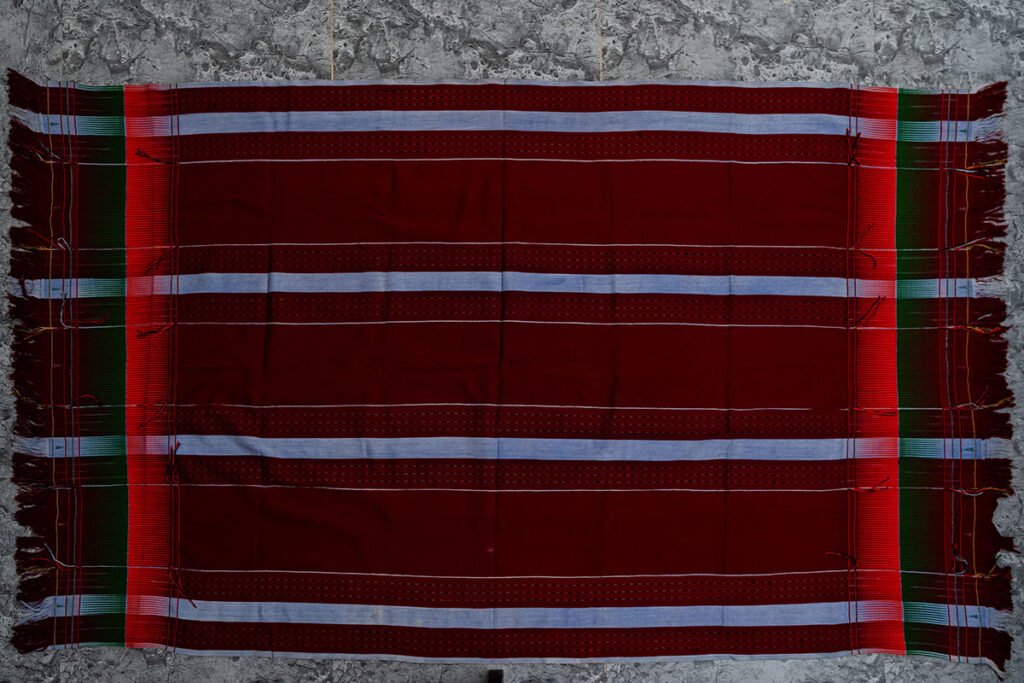
The Haorā shawl is a significant garment for men and heads of families. The name means the loom of the Hao people (tangkhul).
Raivat
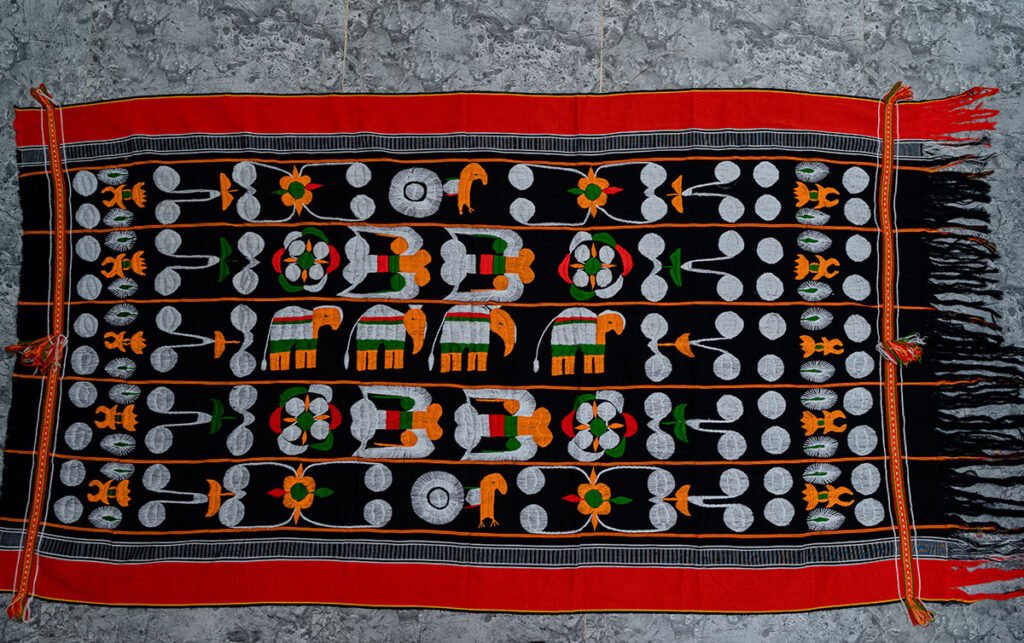
The Raivat shawl is significantly an exclusive attire for the warriors. Embroidered with motifs of elephants, horses, and celestial bodies, the Raivat symbolizes the prestigious social status of the wearer. Today, it is often incorporated into the bridal march to the in-laws’ house.
Chonkhom
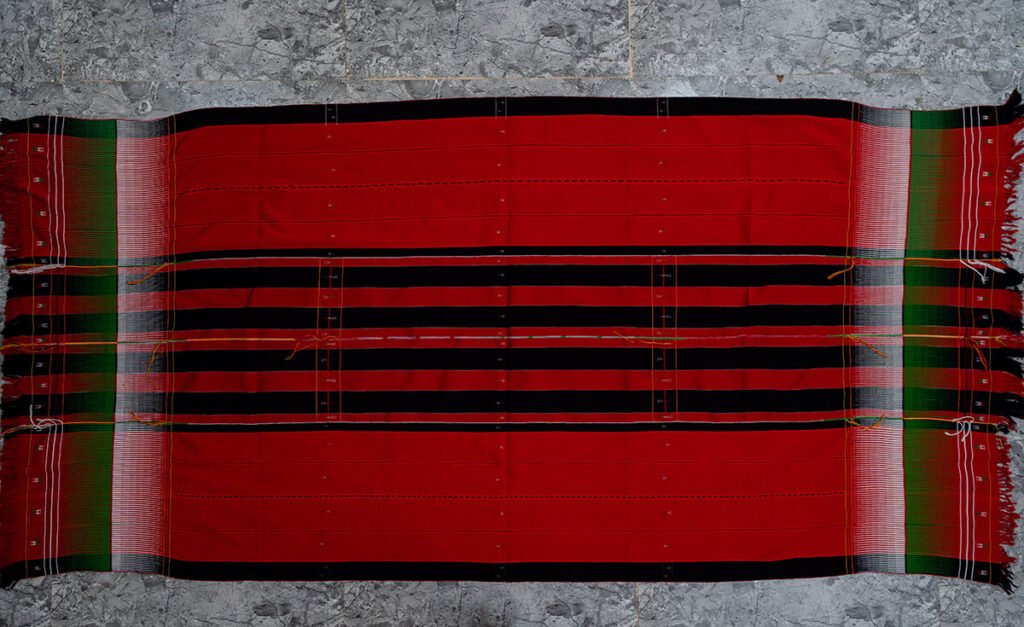
The name is derived from the word, chon – cloth and khom – collection of all flora and fauna observed in the local ecosystem. Chonkhom is a meritorious shawl traditionally worn by men, particularly designed for the youth.
Zingtai Kashan
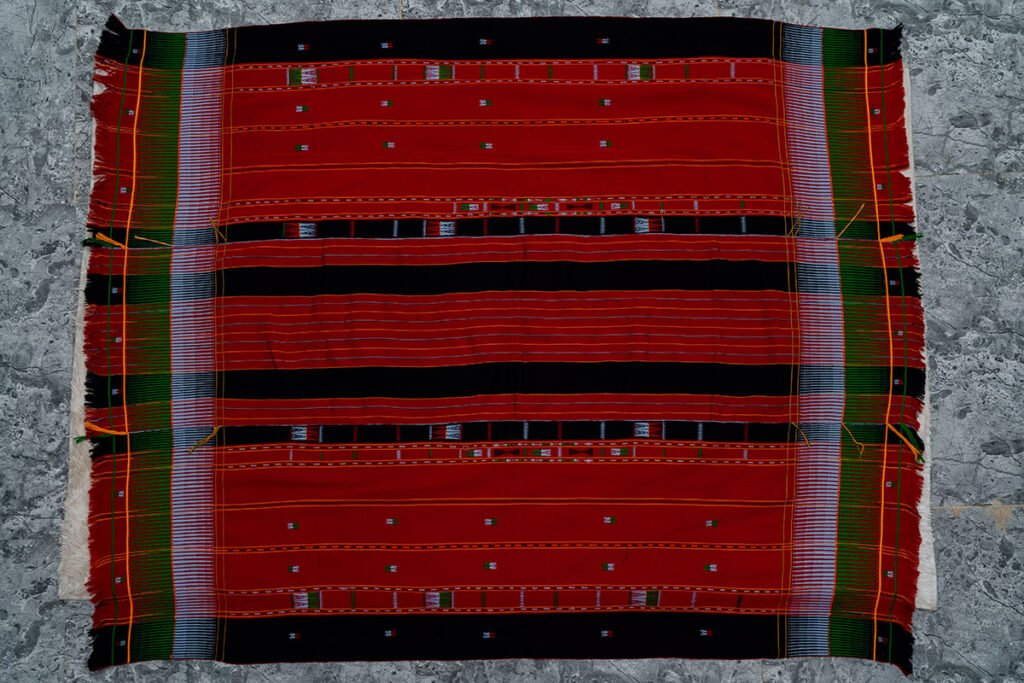
Zingtai Kashan is one of the many cloths created by Mansingla of Zingtai Village in Tangkhul Khaorui area. It is believed that the fairy, Ayi Leimava taught Mansingla the art of weaving and the different motifs and patterns.
Kamo Kashan
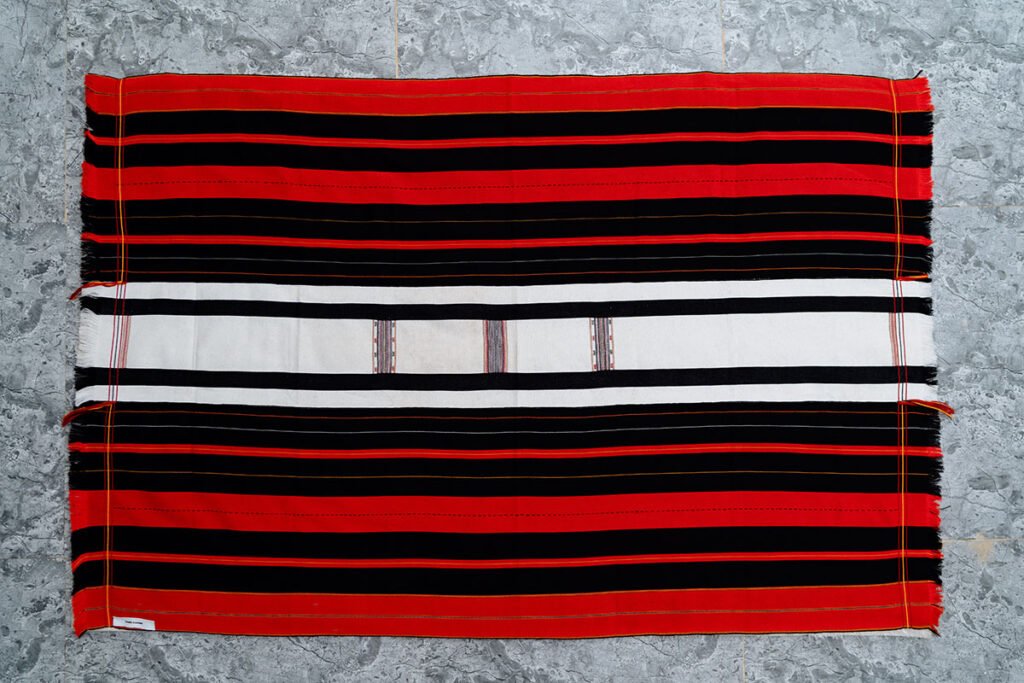
Kamo Kashan originate from the southern and eastern Tangkhul region. The uniqueness of this Kashan is that the motifs on the white mid-band vary, reflecting the characteristics of each village in the region.
Phangyai Kashan
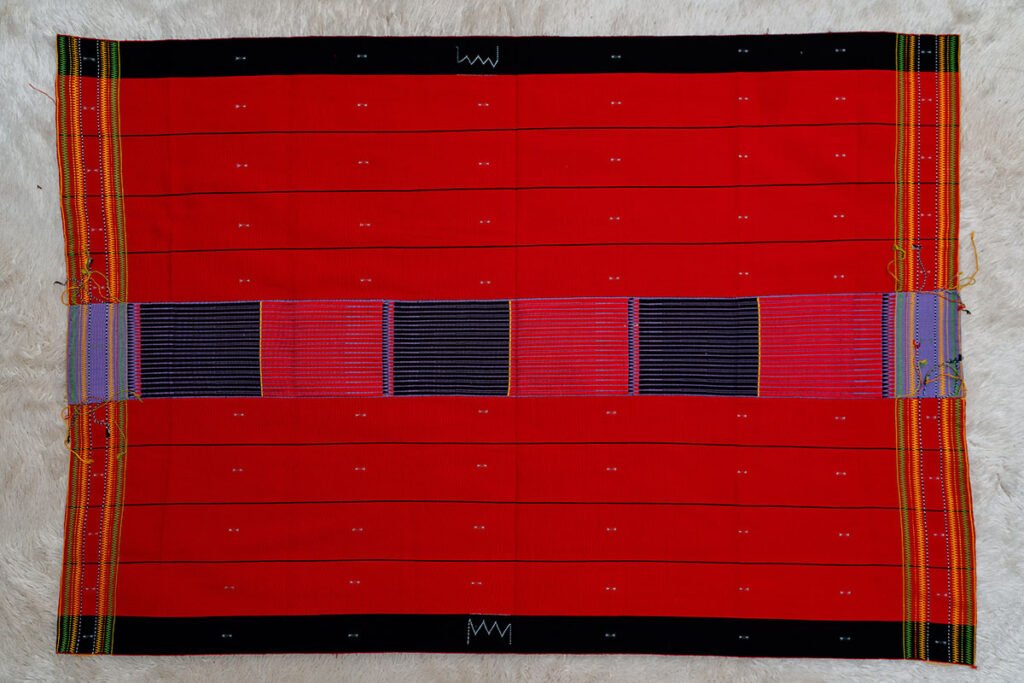
Named after the goddess of wealth, Phunghui, Phangyai kashan is characterized by a red and thin black pattern running parallel with a white band in the middle, adorned with intricate woven designs.
Seichang Kashan
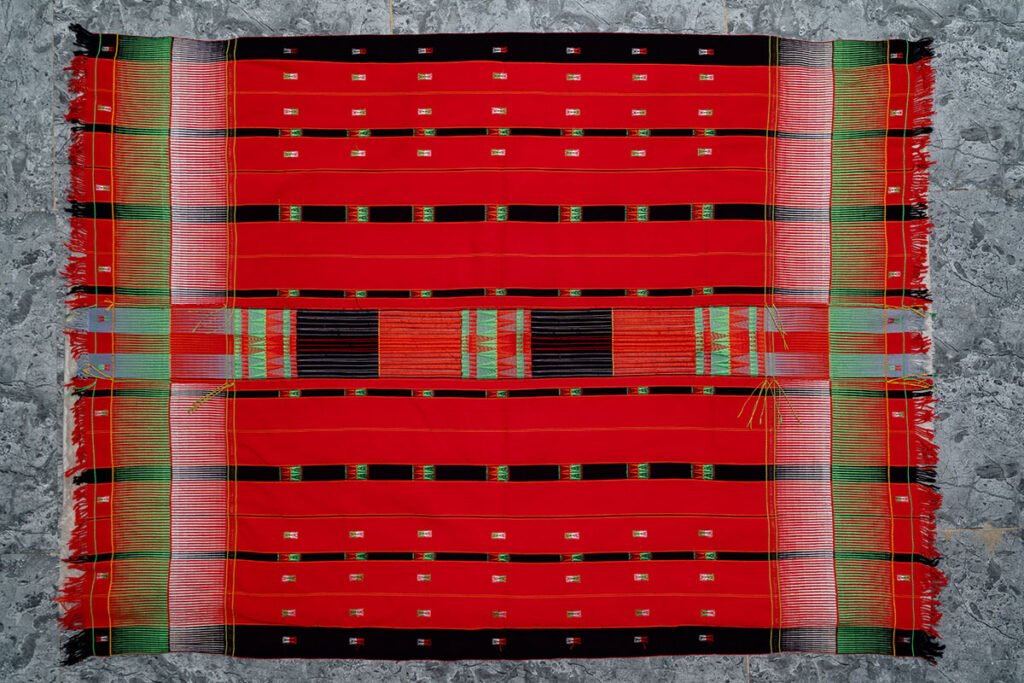
Seichang is a highly esteemed kashan, worn by the wives and daughters of noble lineage who held the titles of Achon Kharar (Elder Sister). The motifs woven into these kashans signify wealth, pride, and royalty, distinguishing them from those worn by commoners.